Traditional biodata formats are still preferred in many families for marriage biodata documents. BiodataBliss offers heritage-style templates with dignified colors and clear sections.
What is this?
Traditional marriage biodata templates draw on visual language Indian families recognise from wedding cards, mandap décor, and decades of printed biodata culture — deep maroon, emerald green, sandalwood cream, and gold filigree borders. They signal respect, ceremony, and seriousness when a biodata is shared among elders, relatives, or at a formal biodata exchange before an engagement discussion. Traditional layouts still organise modern information: degrees, employers, native village, gotra, and sibling details. The frame sets tone; the content builds trust. For many family marriage biodata sharing in North India, Gujarat, and Rajasthan, a traditional biodata is not optional — it is expected. Choosing the right heritage template tells relatives you understand the gravity of a formal family document before a single word is read.
Popular traditional styles
Royal Maroon, Maroon Heritage, Classic Sandal, and Vintage Gold are chosen when relatives expect a familiar, respectful presentation.
Share with confidence
After preview and payment, download a PDF you can print or send on WhatsApp — no awkward screenshots of half-finished documents.
Why elders still prefer traditional biodata designs
Traditional templates communicate that the family understands customs. When ten biodatas lie on a dining table during a meeting, maroon and gold borders help relatives remember which biodata belongs to which household. The design does not replace substance — unclear job titles or missing parent names still hurt — but it sets a respectful first impression for the document. Communities with strong joint-family networks, temple-side family sharing, or mediator-led document sharing often default to Royal Maroon, Maroon Heritage, or Vintage Gold. If you are unsure, ask the relative helping prepare the biodata; one conversation saves a redesign cycle.
Content that belongs inside a heritage frame
Traditional biodatas carry the same core fields as modern ones, with room for community-specific lines. Hindu families may include gotra, nakshatra, and manglik status; others add sect or sub-community only when comfortable. Family sections can mention ancestral village, father's occupation, mother's maiden lineage, and married siblings with cities. Education should list board, college, and year for clarity. Occupation: use formal titles — Assistant Section Officer, not 'government job'. Horoscope summaries often sit at the bottom or in a side block. Keep partner preferences respectful and specific without sounding demanding.
- Parents' full names and occupations
- Native place and current residence
- Siblings with marital status and location
- Community fields your elders expect on paper
Printing and sharing traditional biodatas
Colour printing on A4 card stock or 100 gsm paper shows maroon and gold borders best. For WhatsApp, export the PDF from BiodataBliss rather than screenshotting — text stays sharp when zoomed. Some families print two versions: a full traditional biodata for elders and a simpler PDF for office colleagues. Traditional templates on BiodataBliss are tuned so borders remain visible even on mid-range home printers, though shop colour laser is ideal for a biodata meeting with twenty copies.
Balancing tradition with accuracy
Never inflate income or hide prior engagements — traditional presentation should not mean outdated secrecy. Update posting city after transfer, mention short-term study plans, and align photo with current appearance. BiodataBliss lets you preview heritage templates with real data, switch between Royal Maroon and Royal Sandstone if one suits your photo better, and download when the family committee approves wording.
Regional traditional preferences across India
North Indian families often expect maroon and gold; Gujarati and Rajasthani households may prefer sandstone or cream bases; South Indian introductions frequently use sandalwood tones over deep red. When sending biodata across regions — for example a Punjabi groom to a Tamil family — choose a neutral traditional cream template and ensure horoscope labels are explained. Ask the receiving family if they want a separate kundali printout. Traditional design is a sign of respect; accurate content is what makes the document useful for relatives.
Maintaining one source of truth
Families often maintain biodata in Word for years with conflicting versions. BiodataBliss stores your structured answers so switching from Royal Maroon to Vintage Gold does not reintroduce old typos. After marriage is fixed, archive the final PDF — traditional biodatas sometimes reappear for visa or family records. Update posting and promotion through the edit link rather than handwriting on prints, which looks careless when a relative asks for a fresh copy.
Examples
Hindu groom — Jaipur, mediator circulation
Vikram, 30, MBA, business analyst at PSU bank, posted in Jaipur. Royal Maroon biodata lists gotra, rashi, and non-manglik status per family pandit. Father retired from Rajasthan education department; mother homemaker; one sister married in Jodhpur. Ancestral village in Sikar district highlighted. Partner preference: graduate, family-oriented, within Rajasthan or NCR. Mediator receives printed colour copies plus WhatsApp PDF — traditional frame sits alongside other biodatas in her folder.
Bride — Chennai, formal family meeting
Lakshmi, 27, M.Com, working in family CA firm. Classic Sandal template with cream tones suits South Indian elders who dislike heavy North Indian maroon. Family lists maternal and paternal native places, goldsmith community background, and brother in Singapore. Horoscope details in Tamil abbreviations explained in footnote. Vintage gold corners signal seriousness for a Sunday viewing at bride's home with six uncle families attending.
Rajput groom — Udaipur, heritage hotel family
Manvendra, 32, hotel management, oversees family heritage property. Maroon Heritage lists ancestral thikana name with modest wording, mother's charitable trust work, and sister doctor in Ahmedabad. Partner preference: educated, dignified presentation, Rajasthan or Mumbai. Fifty Vintage Gold prints for Mewar samaj gathering — traditional frame suits community stationery.
Recommended templates
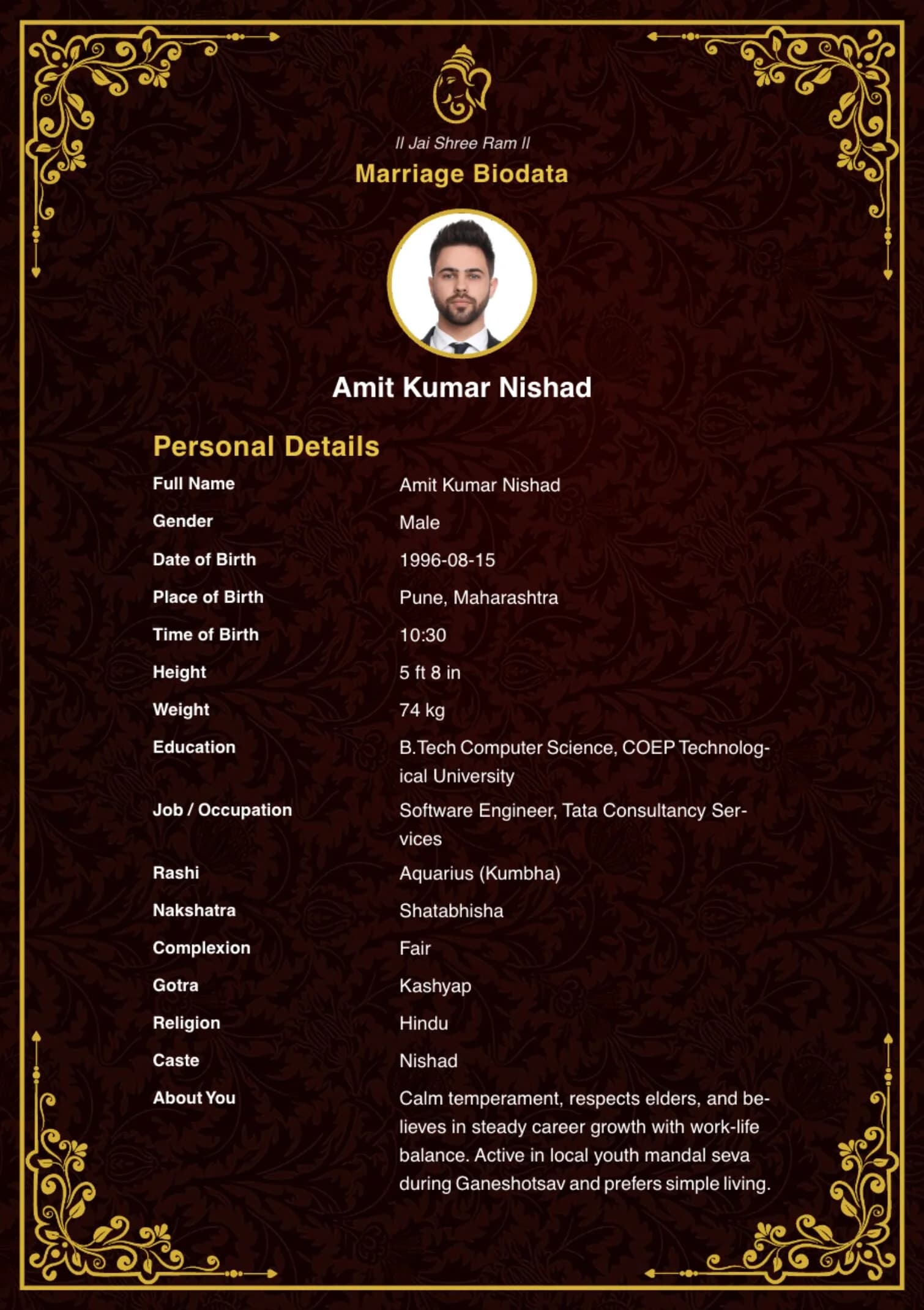 Royal Maroon
The most recognised North Indian ceremonial biodata frame.
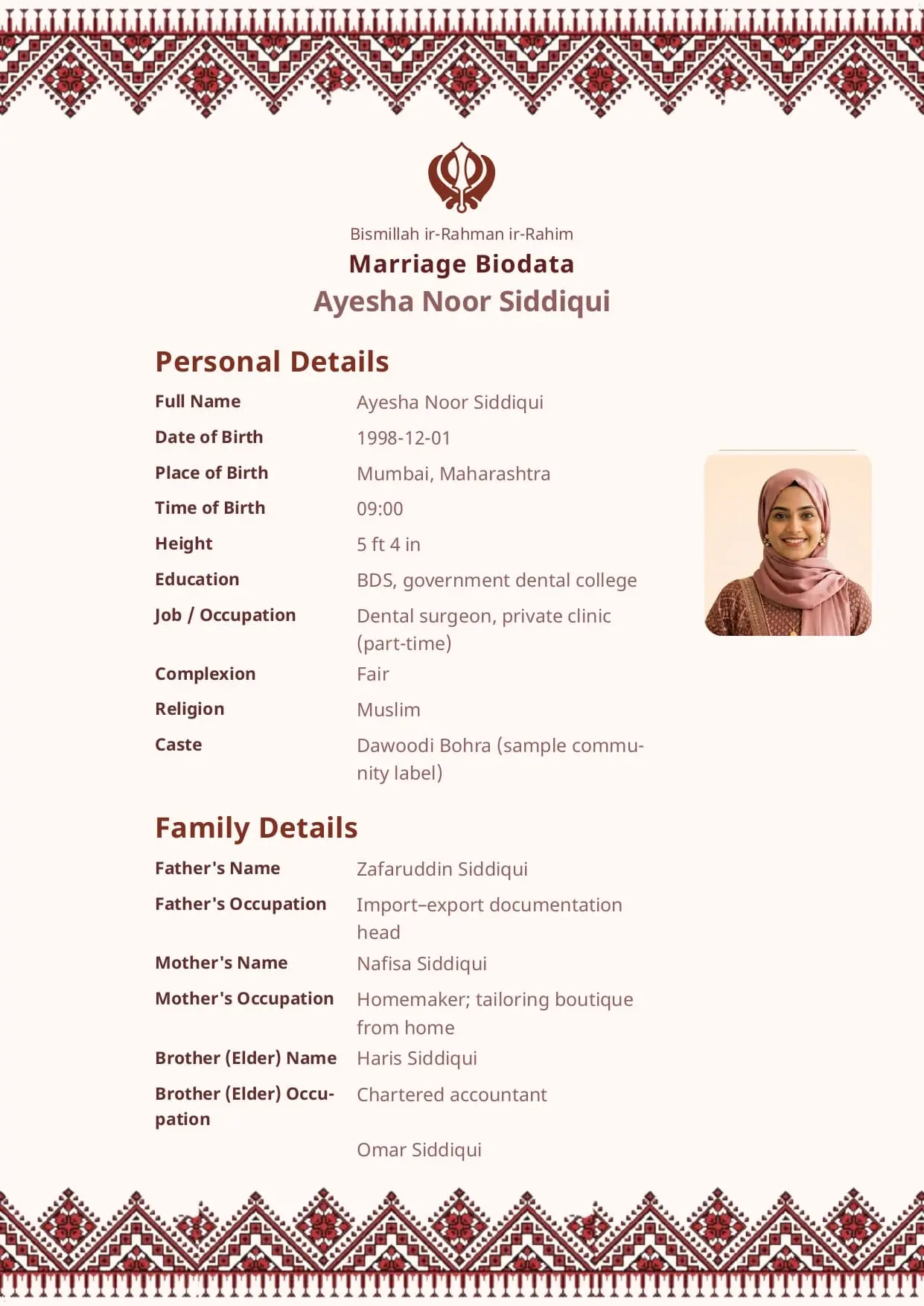 Maroon Heritage
Deep heritage maroon with space for extended family details.
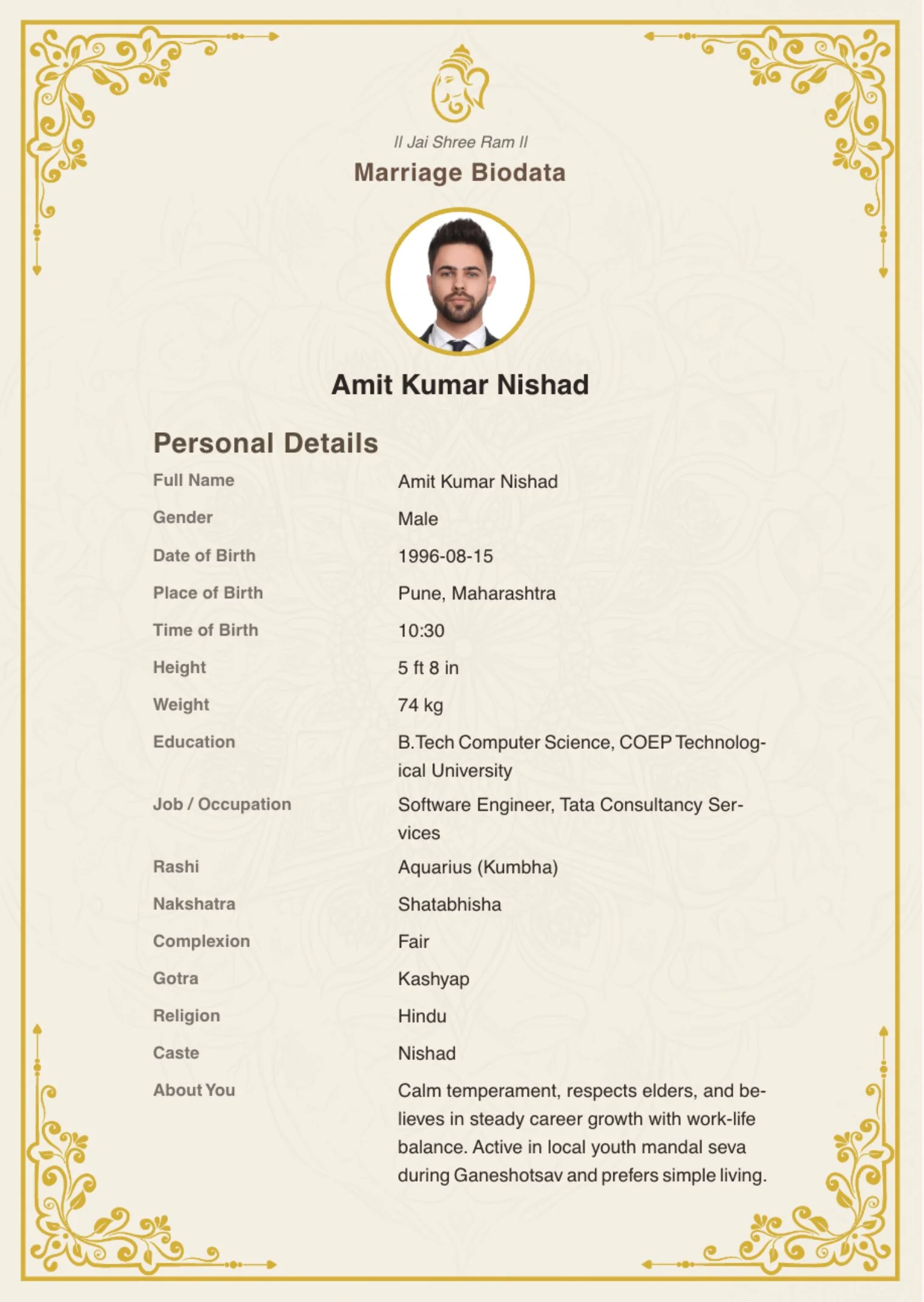 Royal Sandstone
Warmer sandstone tones for a softer traditional look.
Frequently asked questions
Which traditional templates are most popular?
Royal Maroon, Maroon Heritage, Classic Sandal, and Vintage Gold are often chosen for formal marriage biodata documents in conservative families.
When should I use a traditional biodata format?
Choose traditional when elders expect familiar borders, warm maroon or gold tones, and a respectful ceremonial presentation.
Can I include horoscope details on a traditional layout?
Yes. Add birth time, rashi, nakshatra, or gotra in the form or custom fields — they appear in the same dignified frame.
Are traditional biodatas still used for printouts?
Very much so. Many families print copies for relatives; traditional PDFs are sized for home or shop printing on A4 paper.
Does a traditional design make the text harder to read?
Good traditional templates balance decoration with readable type. Preview yours with real details to confirm every section is clear.