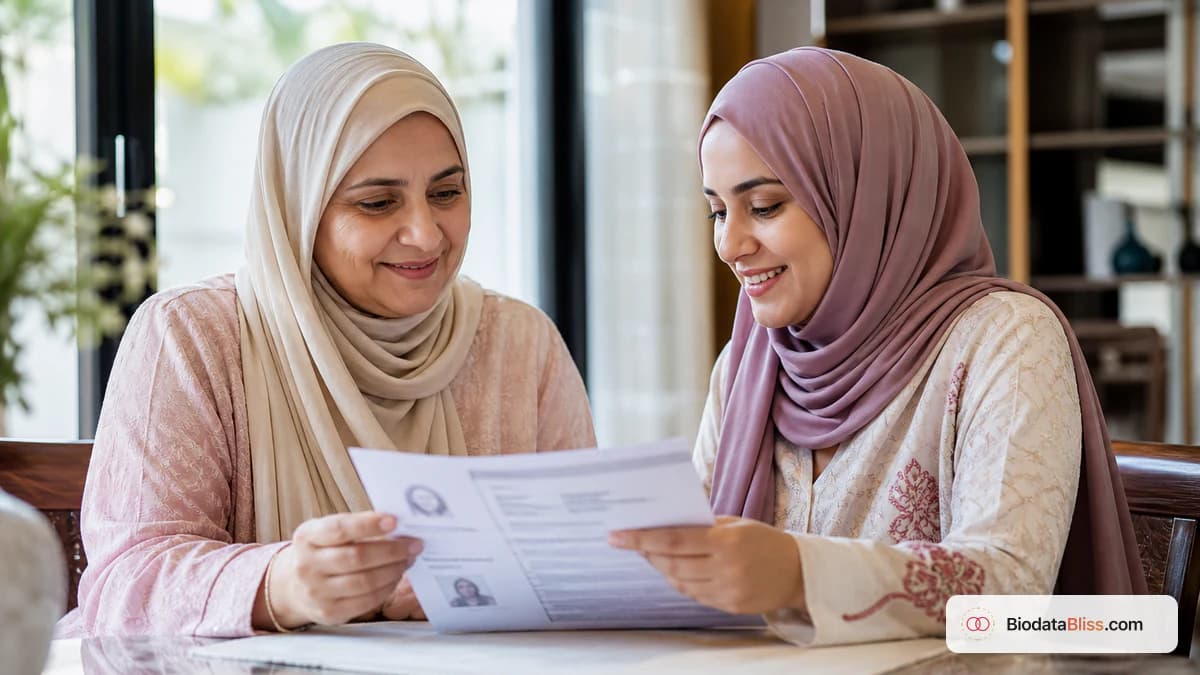
A Muslim marriage biodata works when it feels like a respectful family introduction — honest facts, calm tone, modest photo, and one PDF relatives can forward without a twenty-question follow-up.
Searching for a Muslim marriage biodata format? You usually want a one-page nikah profile that families in Delhi, Hyderabad, Lucknow, Mumbai, Bengaluru, or abroad can skim on WhatsApp, print for elders, or share through a rishta contact. Lead with personal basics, education, work, family background, a modest recent photo, and a parent or wali contact. Add sect, maslak, or native place only when your elders already exchange those lines. This guide covers what to write, what to skip, common mistakes, and how to create a free PDF on BiodataBliss — with Urdu, Hindi, and English-friendly wording. For a general checklist, see our guide on what to include in a marriage biodata.
The problem: CVs, kundali blocks, and three cousin drafts
Most Muslim marriage biodata mistakes start the same way. Someone pastes a job resume, adds a heavy border in Word, or copies a Hindu biodata template with gotra and nakshatra fields that do not apply. By evening, three cousins have three versions in the family group — and the one that gets forwarded is the shortest, not the most accurate.
Families are not hiring you. They are deciding whether a respectful first conversation is worth everyone's time. A pasted LinkedIn profile, a decade-old photo, or vague lines about "good family" slow trust faster than a missing salary figure ever will.
- Resume language belongs in job applications, not nikah introductions
- Hindu horoscope blocks confuse readers when your circle does not match on stars
- Three conflicting drafts in one WhatsApp group kill clarity
- Vague "decent boy/girl" lines force awkward follow-up calls
- One agreed master PDF beats nightly cousin edits
What a Muslim marriage biodata format is for
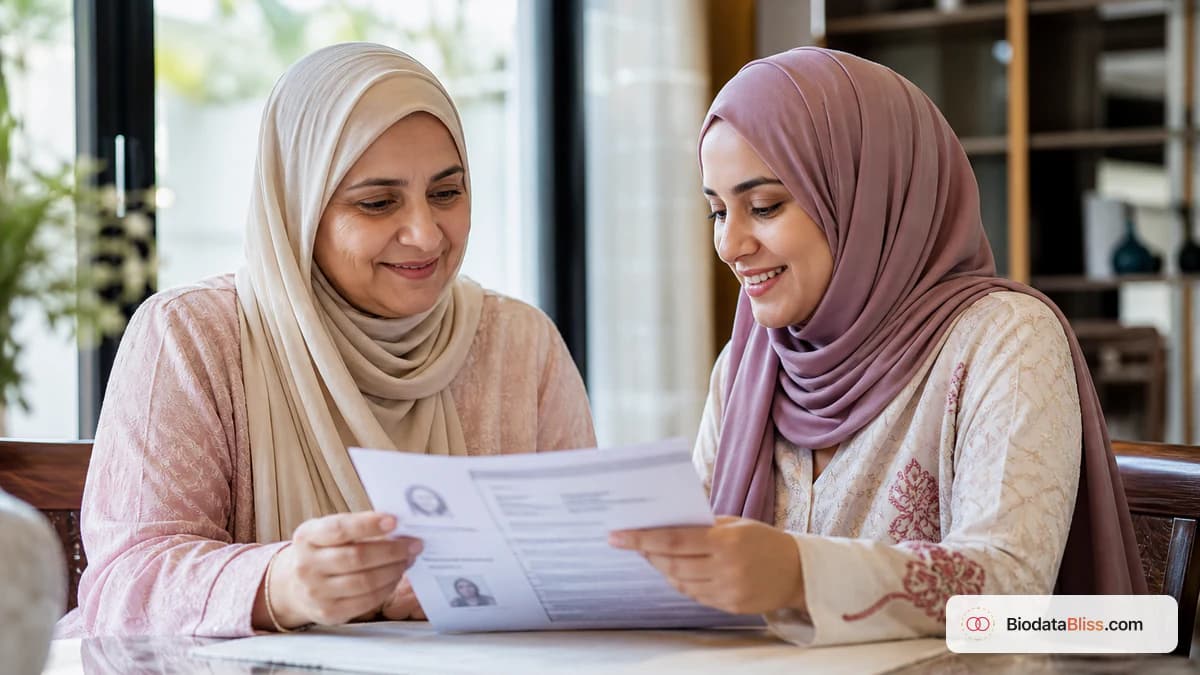
Think of the biodata as a calm first hello between families — not a property brochure and not a religious debate on paper. Relatives in India and overseas still want the same core answers: who you are, where you live, what you studied, how you earn or study, who your parents are, and how to reach someone who answers the phone.
Islamic marriage customs vary by region and community. Wikipedia's overview of Islamic marriage in the Indian subcontinent is a useful background read — but your family's actual WhatsApp habits matter more than any generic template from the internet.
- One scannable page for WhatsApp and print
- Facts first: age, height, city, education, work or studies
- Family context without a wealth pitch
- Modest solo photo that matches meeting-day expectations
- Parent or wali contact for first forwards in many circles
Core fields every nikah biodata needs
Start with full name, date of birth (or age), height, current city, and native place if it differs from where you work now. Education should fit one plain line — degree and field, not a semester-by-semester story.
Career or studies need everyday language: role and company, or current course and college. Skip exact CTC, payslip details, and long project lists on page one — our guide on how much salary to mention in a marriage biodata explains the privacy balance.
- Personal: name, DOB/age, height, city, native place if useful
- Education in one readable line
- Profession or study status in plain words
- Family: parents' names and occupations, siblings briefly noted
- Photo: recent modest solo portrait
- Contact: parent or wali number for first shares when elders lead the search
Empty optional fields beat invented ones. If you are unsure about maslak wording, ask parents before typing.

Religious lines: sect, maslak, and when to include them
Many Indian Muslim families exchange sect or maslak details early — Sunni or Shia, and within Sunni circles sometimes Deobandi, Barelvi, Ahl-e-Hadith, or Tableeghi background. Others discuss these only after a warm first call. Follow your family's habit; do not invent lines to look "more traditional."
Spell names the way your parents already write them on invitations and older biodatas. Consistency builds trust faster than copying a random PDF from a cousin in another city.
- Sect: only if your elders already share it on first introduction
- Maslak / school of thought: one short line when your circle expects it
- Native place and family root: useful when families compare background
- Religious practice: brief and honest — not a performance resume
- Never guess or mix up sect labels to fill empty space
Partner preferences without sounding harsh
Partner preferences belong on many Muslim biodatas — education level, city, profession, religiosity, hijab or beard expectations, and whether you prefer a working spouse. The tone matters more than the list. Polite specifics beat vague demands or a shopping-list tone.
See our full guide on how to write partner preferences in a marriage biodata for wording examples. Keep lines short enough that a relative can read them aloud without cringing.
- Prefer clear, kind lines over long requirement paragraphs
- Religious expectations: state calmly, not as accusations
- Location and education: practical filters many families understand
- Avoid insulting language about complexion, weight, or caste-like labels
- Leave room for conversation — the biodata opens the door, it does not replace it
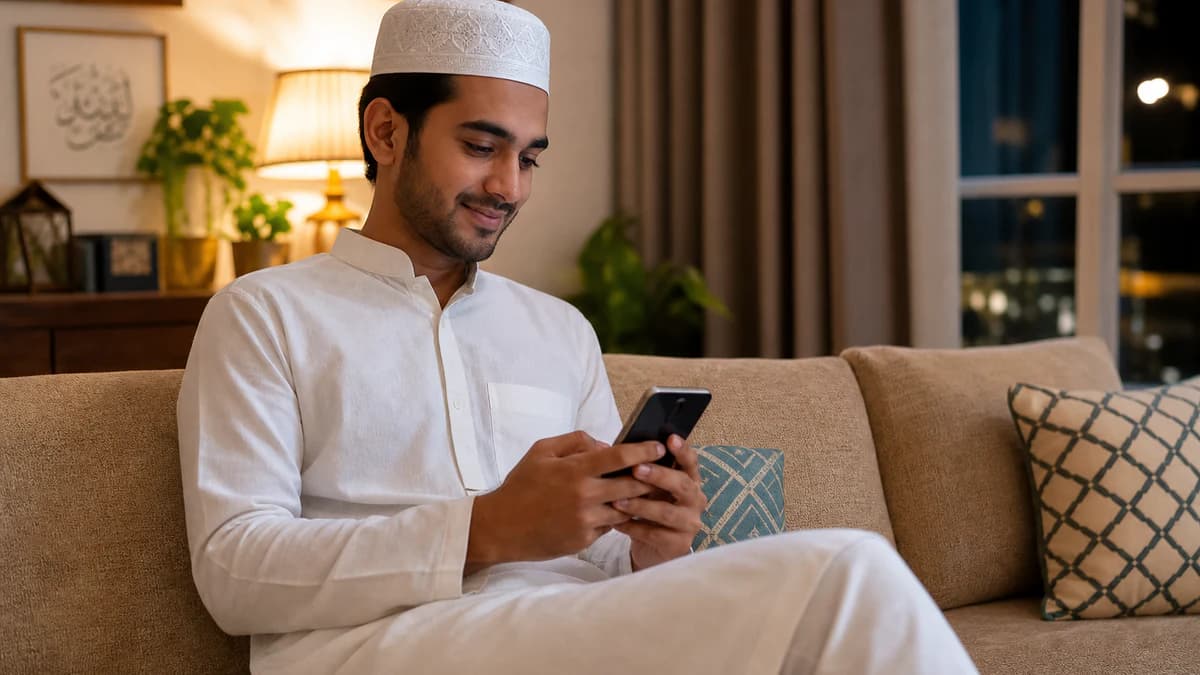
Photo and modesty rules that protect first impressions
Use a recent solo portrait in neat formal or modest traditional dress, plain background, clear face. For many families, hijab in the photo for women and neat beard or clean-shaven consistency for men matches what elders expect at a first meeting.
Group shots, heavy filters, and old college photos invite questions you do not want on day one. Our marriage biodata photo rules guide covers size, crop, and background in detail.
- Recent solo photo, face clearly visible
- Modest outfit that matches your family's meeting norms
- No sunglasses, no collage frames, no heavy beauty filters
- Same person families will meet — not a filtered stranger
- Crop for mobile: face visible without pinch-zoom
Muslim biodata vs Hindu biodata (quick comparison)
Families sometimes receive both formats in the same rishta season. Knowing the difference keeps your page focused and respectful.
- Muslim format: personal, education, career, family, optional sect/maslak, modest photo, parent contact
- Hindu format (many circles): often adds rashi, nakshatra, gotra, mangal dosham — see our Hindu marriage biodata format guide
- Muslim tone: family introduction; avoid horoscope blocks unless your family uses them
- Both: one-page WhatsApp PDF, polite partner preferences, no pasted resume
- Language: Urdu, English, Hindi, or mixed — write what your forwarder reads
Urdu, English, Hindi, or mixed — who is reading?
Use the language relatives will read aloud. Many urban families use English with Urdu or Hindi field names. Others prefer more Urdu or Devanagari for elders who are more comfortable in those scripts.
On BiodataBliss you can fill in the language your family agrees on and preview on a phone before you decide. One spelling of your name across PDF, chat, and matrimony sites — always.
- Write for the person who will forward the PDF
- Keep labels and values consistent across drafts
- Avoid three spellings of the same name in one family group
- Mixed wording is fine if it reads naturally aloud
Common mistakes (and fast fixes)
These show up in Muslim biodata forwards as often as anywhere else. Fix them once, then retire older drafts from the chat.
- Pasting a job CV instead of a family introduction — rewrite in plain lines
- Copying Hindu horoscope fields that your circle does not use — delete them
- Wrong phone number or outdated parent occupation — verify with family
- Harsh partner preference wording — soften to polite specifics
- Sending a screenshot instead of a PDF — use WhatsApp Document for sharp text
- Three cousin versions live in the group — pick one master file
For a broader mistake list, see common marriage biodata mistakes.
Step-by-step: create yours free on BiodataBliss
No design skills required. Fill once, preview on mobile, download one PDF your family can share confidently.
- 1. Visit biodatabliss.com → Create Biodata
- 2. Fill Basics, Family, Contact, and Photo in order
- 3. Add sect or maslak lines only if your elders want them on page one
- 4. Write partner preferences in a calm, respectful tone
- 5. Preview on a real phone — check fonts and photo crop
- 6. Download the free PDF and send as a WhatsApp Document
Benefits of a clean Muslim biodata PDF
When the page is honest and easy to skim, introductions move faster. Elders find contact details without calling back. You spend less time re-explaining basics that should have been on page one.
A free, print-ready PDF on BiodataBliss also means one template family can agree on — Rose Clean or Soft Sky for WhatsApp, Classic Ivory or Royal Maroon if someone wants a ceremonial print for a home meeting.
- Faster first impression in family and rishta groups
- One master PDF you can update when job or city changes
- Mobile-friendly layout elders can read without pinch-zoom
- Modest photo and clear contact build trust early
- Free preview before anyone forwards your name
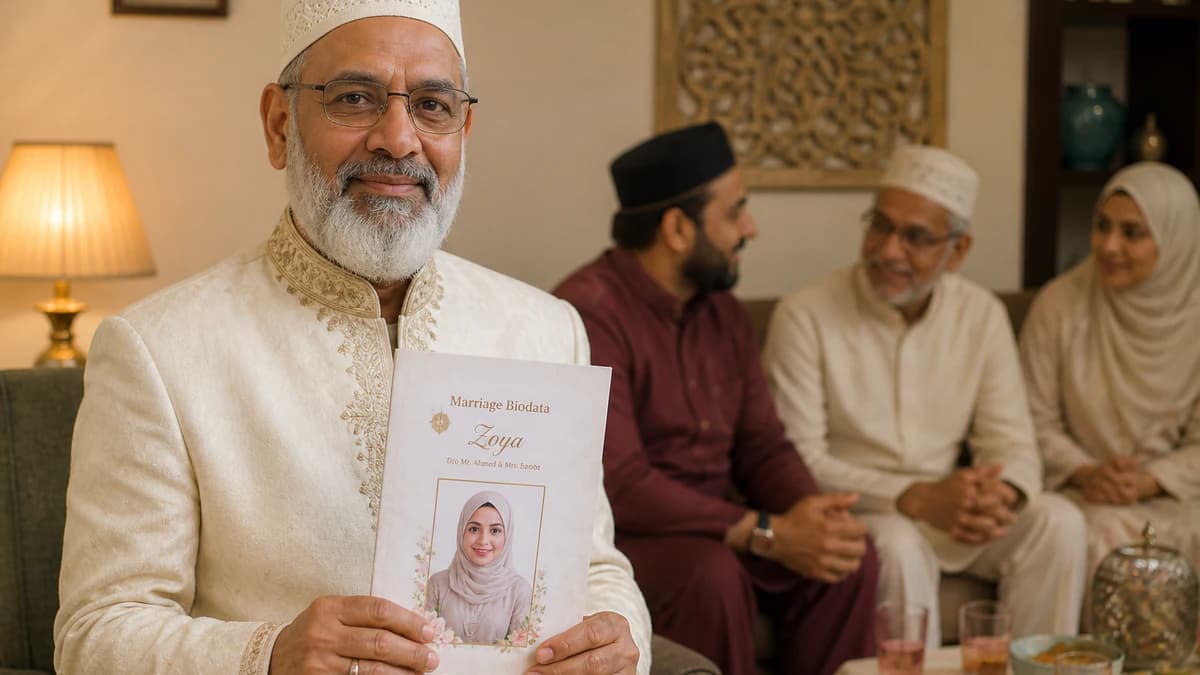
Before you hit send
A strong Muslim marriage biodata format is honest, modest, and skimmable — not resume-heavy and not copied from another community's template. When personal facts, family lines, photo, and parent contact feel right, create your free PDF on BiodataBliss and share that single version.
Start on आत्ताच बायोडाटा तयार करा, then pick a look on टेम्प्लेट्स before you download.
Create your free Muslim marriage biodata in minutes — guided form, mobile preview, instant PDF.
आत्ताच बायोडाटा तयार कराhttps://biodatabliss.com/mr/create-biodata(नवीन टॅबमध्ये उघडते)